

Roof Underlayment Comparison Guide: Everything You Need to Know
What Exactly is Roof Underlayment?
When people think about their roof, they usually picture the visible part – tile, shingles, or metal panels. But what protects your home or business isn’t just that visible outer layer. The real backbone of your roof’s waterproofing and longevity is the underlayment – the hidden barrier installed between the roof deck and the roof covering. The underlayment option you choose for your situation & climate can be the difference between a roof that’s healthy for 30 years vs. a roof in need of replacement in less than 10 years.
Homeowners, HOAs and property managers alike often ask: Which underlayment is best for my roof?
Choosing the right underlayment is one of the most important decisions you can make in the roof renovation / replacement process, whether you’re a homeowner, managing an HOA, or overseeing a commercial property. In this guide, our experts will break down the most common underlayment options, their pros and cons, and which situations each is best suited for.
Why Underlayment Matters
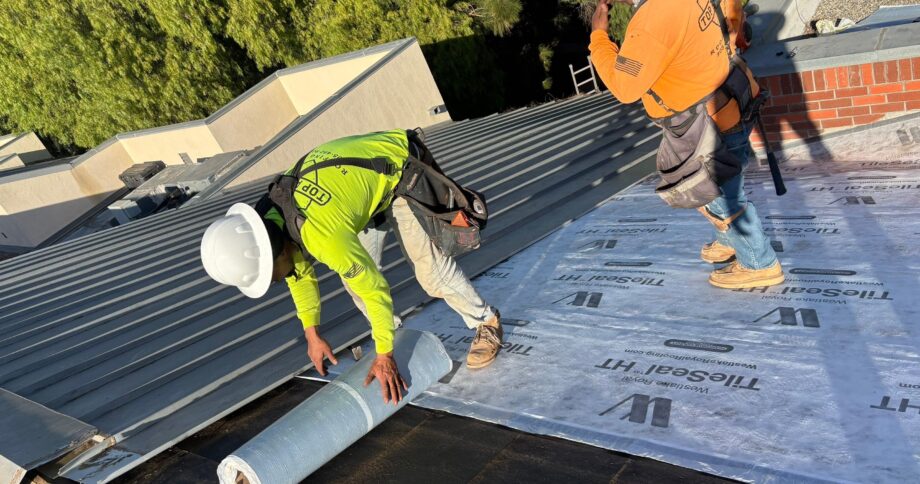
Underlayment serves as a secondary line of defense against water intrusion, protecting your roof deck from leaks, mold, and rot. Even the strongest roof coverings – tile, asphalt shingles, or metal – can fail without the right underlayment underneath.
- It keeps water out when wind-driven rain or debris pushes moisture under the roof covering.
- It provides a critical cushion and barrier in valleys, around penetrations, and on low-slope sections.
- It extends the overall lifespan of the roofing system.
When underlayment fails, the results are costly & disruptive: leaks, interior water damage, structural rot, and shortened roof life.
The Main Types of Roofing Underlayment
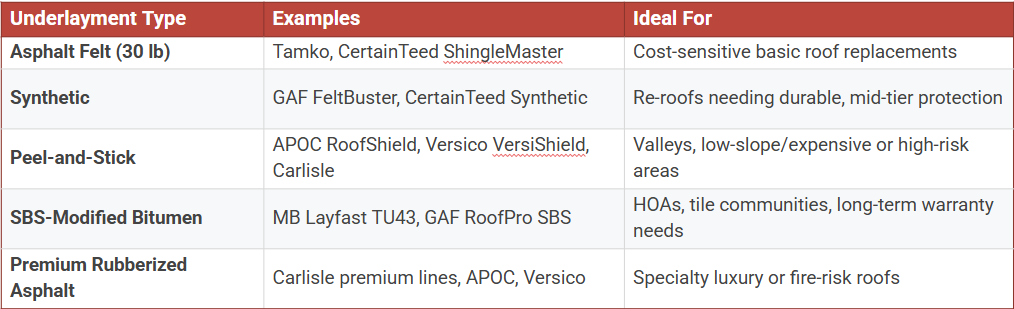
1. Asphalt-Saturated Felt (30 lb Felt Paper)
- Best For: Traditional asphalt shingle and tile roofs (new construction or budget projects).
- Pros: Affordable, widely available, easy to install.
- Cons: Short lifespan (15–20 years), prone to drying, tearing, and shrinking.
- Examples:
- CertainTeed ShingleMaster Select Felt
- Tamko 30lb Roof Felt
- Key Takeaway: Meets building code minimums but often replaced with longer-lasting options during reroofs.
2. Synthetic Underlayment
- Best For: Asphalt shingles, tile, or metal roofing.
- Pros: Lightweight, tear-resistant, slip-resistant surface for crews, often UV resistant (can remain exposed longer).
- Cons: Wide range of quality—some brands are thin and not much better than felt.
- Examples:
- GAF FeltBuster Synthetic Roofing Underlayment – lightweight, tear-resistant, and gives better footing for crews
- CertainTeed Synthetic Underlayment – commonly used under shingles and tiles; offers longevity and slip-resistant surfaces.
- Key Takeaway: A durable, mid-priced upgrade that’s becoming the new industry standard.
3. Peel-and-Stick (Self-Adhered) Membranes
- Best For: Valleys, eaves, low-slope areas, or entire roofs in high-wind/rain zones.
- Pros: Fully adheres to decking, excellent waterproofing, self-seals around nails, ice dam protection.
- Cons: Higher cost, harder to remove during future reroofs.
- Examples:
- APOC RoofShield Self‑Adhering Membrane – a go-to for valleys, eaves, and high‑rain zones.
- Versico VersiShield – adds premium water resistance and nail‑proof self-sealing properties.
- Carlisle Ice & Water Shield – trusted in many climates for its adhesion and leak protection.
- APOC RoofShield Self‑Adhering Membrane – a go-to for valleys, eaves, and high‑rain zones.
- Key Takeaway: Premium protection for vulnerable areas or full-roof coverage where leaks are a big risk.
4. SBS-Modified Bitumen Underlayments (e.g., TU43, TU35)
- Best For: Tile resets, HOAs, high-value residential roofs.
- Pros: Multi-ply, rubber-modified for flexibility and strength, long manufacturer warranties (up to 30 years).
- Cons: More costly than synthetics or felt, requires professional installation.
- Examples:
- MB Technology Layfast SBS Underlayment (TU43, TU70 variants) – multi‑ply, long‑lasting, and can carry up to 30‑year material warranties.
- GAF RoofPro™ SBS‑Modified All‑Purpose Underlayment – engineered for high performance and wind‑driven rain protection.
- Key Takeaway: A long-term, HOA-preferred solution for concrete/clay tile communities.
5. Rubberized Asphalt Underlayment
- Best For: Luxury roofs, slate, or high-end metal systems.
- Pros: Maximum waterproofing, excellent elasticity, heat resistance.
- Cons: Expensive and oftentimes overkill for standard residential projects.
- Examples:
- Carlisle Membrane Systems – high-performance, heat-resistant underlayments for specialty roofing.
- APOC and Versico offer heavier, fire-rated options for luxury and high-value applications.
- Key Takeaway: The gold standard when budget isn’t the main concern.
Secondary Benefits of Roofing Underlayment
While moisture protection is its key role in a roofing system, underlayment can also provide important ancillary benefits:
- Fire Resistance: Certain underlayments are fire-rated and required for wood shake or in wildfire zones like Southern California. (a key consideration for those of us in Thousand Oaks & surrounding areas)
- Thermal Performance: Some synthetics and modified systems reduce heat transfer slightly, protecting the roof deck and cooling attics.
- Wind Uplift Protection: Acts as a temporary safeguard if tiles or shingles blow off, keeping water out until repairs.
- Noise Dampening: Multi-ply systems help reduce rain noise under tile or metal roofs.
- UV Resistance & Temporary Protection: Premium synthetics and membranes can be left exposed for weeks or months during extended projects.
Choosing the Right Underlayment for Your Roof
So, we have established that there are many different options when it comes to underlayment options for your roof – each with its own specific features & benefits for different roofs and situations.
- Luxury Roof? Consider rubberized asphalt for maximum lifespan and protection.
- Asphalt Shingle Roof? Synthetic is usually the sweet spot between cost and performance.
- Tile Roof? A multi-ply SBS system like TU43 offers the longevity HOAs and homeowners need – often backed by lengthy warranties.
- Flat Roof Sections? Peel-and-stick or full TPO systems are a popular choice here.
Underlayment Cost Considerations:
Here’s how typical underlayment options stack up in cost (installed):
- 30 lb Felt: Low cost, shorter life span.
- Synthetic: Moderate cost, strong long-term value.
- Peel & Stick (Self-Adhered): Moderate to high cost depending on coverage area. Quick install & great for high-leak areas.
- Rubberized Asphalt: High cost, premium performance & longevity.
- SBS/Modified Bitumen: High cost, ideal for tile communities and can include 30+ year warranties.
Some truth from a professional’s perspective: Saving on underlayment is almost always a mistake. The cost difference is small compared to the overall roof, but the protection difference is massive.
In Conclusion
Roofing underlayment may not be visible, but it is the unsung hero that protects your home, business or community from costly water damage. At Top Armor Roofing, we’ve installed everything from basic felt to high-performance SBS membranes on projects ranging from single-family homes to 100+ unit HOA communities. The right choice depends on your roof type, budget, and long-term goals.
While this guide is designed to arm you with lots of knowledge on the topic of roofing underlayment, it’s no substitute for the 35+ years experience we have here at Top Armor Roofing Inc. We are just a phone call away – ready to chat with you about the perfect roofing options for you.